
▣
Workplace wellness
Program design for teams of 15 to 500: annual calendars, incentive structures, communication kits and participation tracking that survives a busy season.
We design, deliver and evaluate non-clinical health education for employers, schools, faith communities and nonprofits across Duplin County and eastern North Carolina — in plain language, on a realistic budget, with attendance and outcome reporting you can hand to a board.
Speak with Johnson Mateke directly · (317) 223-9487
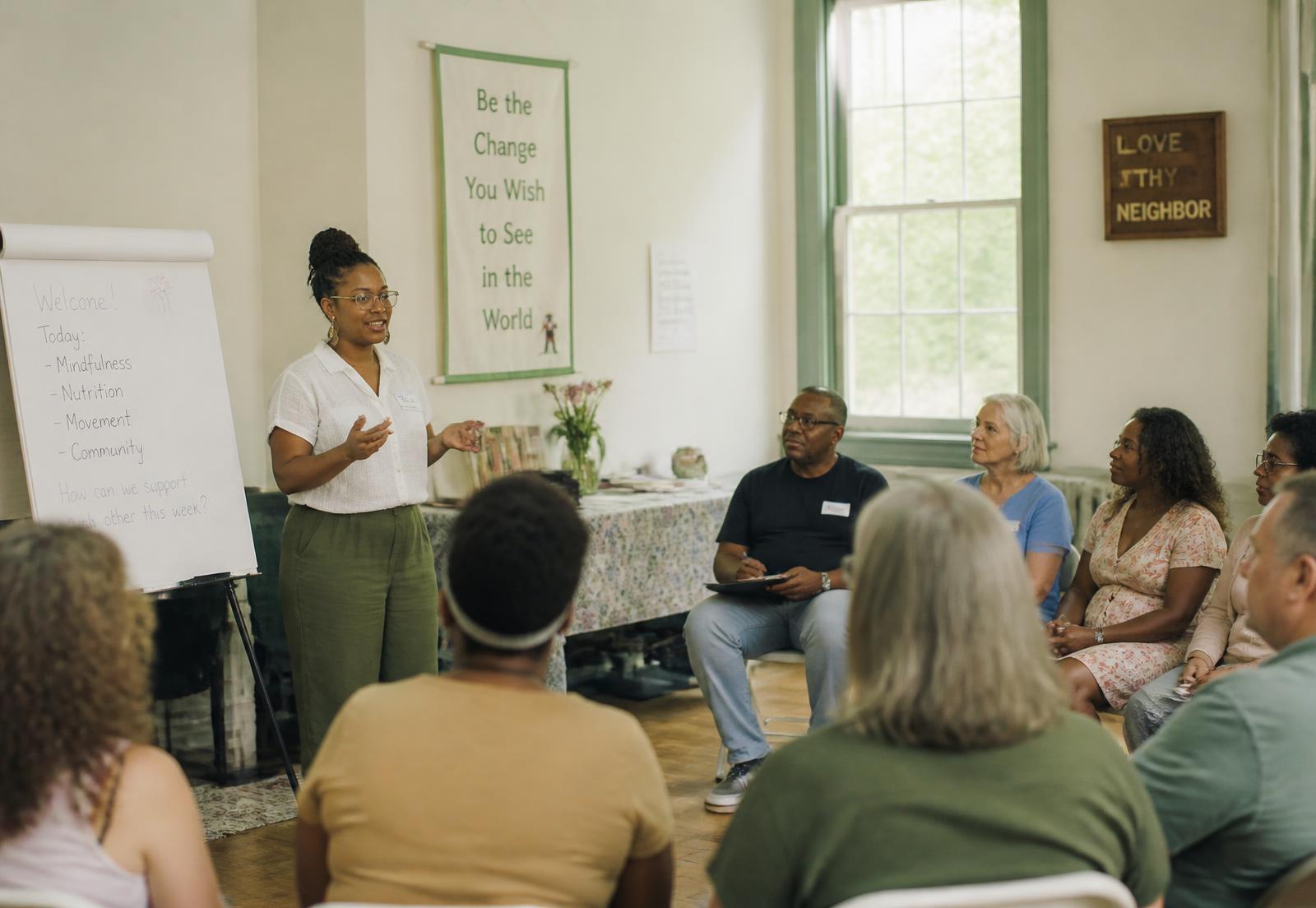
Every engagement starts with listening — to staff, to volunteers, to the people who actually show up. Then we build something small enough to sustain and specific enough to measure.
Program design for teams of 15 to 500: annual calendars, incentive structures, communication kits and participation tracking that survives a busy season.
Workshop series for churches, community centers and county partners on nutrition basics, movement, sleep, stress and navigating appointments.
Needs assessments, logic models, survey instruments and reporting packets written for funders, boards and grant renewals.
Half-day and full-day sessions for supervisors, HR teams, volunteers and lay health leaders who carry the program after we leave.
They are written for the wrong shift. They assume a gym nobody can reach. They ask people to log into a portal they never open. After a decade of running programs in small towns, plants, clinics and church halls, we build around the constraints first.
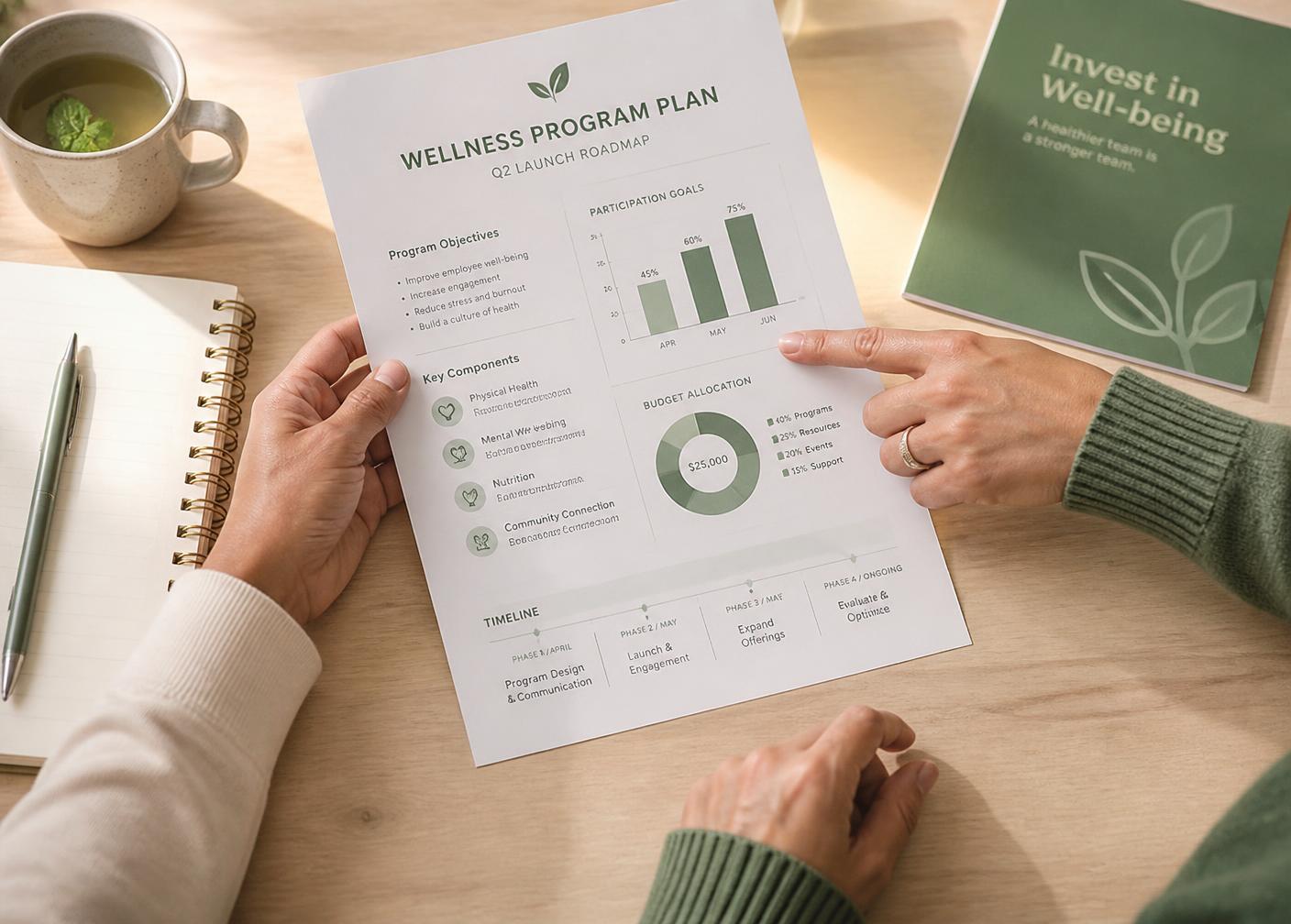
Figures reflect our internal sign-in and evaluation records through June 2026 and are available in detail on request.
Each program is modular. Take the full series or a single session — the facilitator guide, handouts and evaluation form come with it either way.

Practical food education built around what is actually sold at the local grocery: budget swaps, sodium, portion cues, label reading and cooking for one or two.
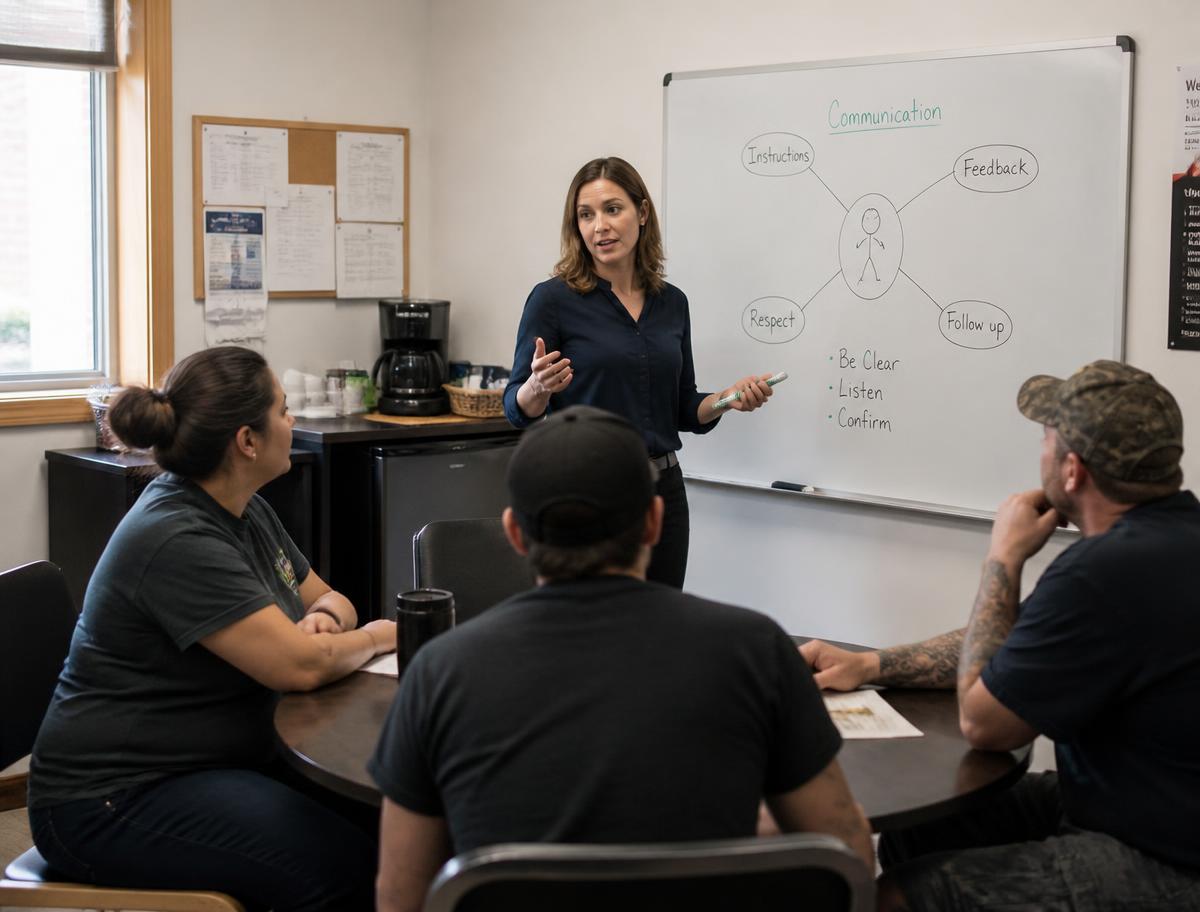
A break-room series for shift workers: sleep debt, hydration, back-care habits, stress signals and how to use the benefits you already pay for.

Support education for family caregivers: appointment preparation, medication organization, respite planning and protecting the caregiver’s own health.
A 30-minute conversation, free of charge. What is prompting this, who is affected, what has already been tried, and what would make the next twelve months feel like a success.
Short surveys, a walk-through of your space and interviews with 5–10 people across roles. We look at scheduling, physical environment, communication channels and existing benefits.
You receive a plain-language program plan: objectives, session calendar, materials list, staffing, budget and the exact measures we will report against.
We facilitate on site, or we train your internal leads to run it. Every session includes handouts, a sign-in sheet and a two-minute evaluation.
A closing report with participation, feedback themes and recommendations — formatted so it can go straight into a board packet or grant renewal.
“We had a wellness binder nobody opened. Johnson spent two days on our floor before proposing anything, and the plan he wrote finally matched how our crews actually work.”
“Our members trusted him quickly. He explained things without talking down to anyone, and the handouts were something people took home and used.”
“The end-of-program report went into our grant renewal almost untouched. That alone saved our small staff a week of work.”
Client names are withheld by agreement. References can be provided during a proposal conversation.
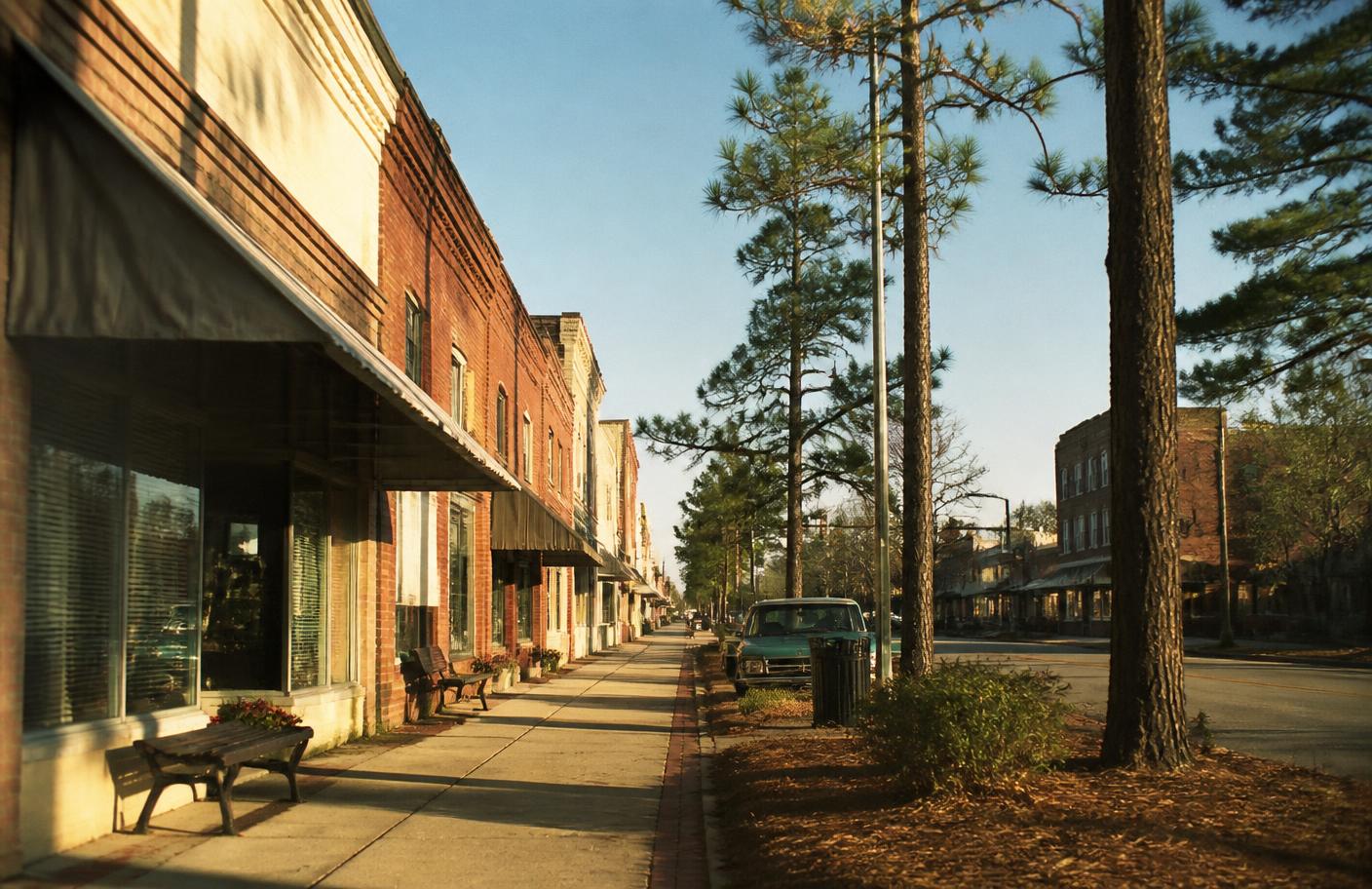
Our office sits on North Pope Street in Magnolia. Most of our work happens within about ninety minutes of it — Wallace, Warsaw, Kenansville, Rose Hill, Clinton, Burgaw, Goldsboro, Jacksonville and Wilmington. We also support remote planning and virtual facilitation for organizations elsewhere in North Carolina.
Being local matters more than it sounds. We know which pharmacies stay open late, which employers run rotating shifts, and which community rooms are free on a Tuesday evening. That knowledge is half of a program that people actually attend.
Why most annual plans collapse in the fourth quarter, and a twelve-month structure that assumes interruptions instead of pretending they will not happen.
Software is rarely the missing piece. Ask these questions first so you do not pay per employee for a login nobody uses.
Attendance benchmarks from small-town programs, and why a 22% turnout can be a genuine success depending on how you counted.
The first call is thirty minutes, free, and comes with no proposal attached unless you ask for one. Bring your questions — we will tell you honestly whether we are the right fit.